

 English
 Español
Are Poly Coated Paper Sheets Safe for Direct Food Contact?
In the complex landscape of food packaging engineering, the safety and integrity of barrier materials are paramount. Poly coated paper sheets have emerged as a ubiquitous solution in the food service and packaging industries, serving as a critical interface between consumable products and the external environment. As a specialized manufacturer dedicated to high-performance packaging materials, we recognize that the primary concern for B2B procurement officers and food safety managers is the material's compliance with direct food contact regulations. This analysis delves into the material science behind these products, examining their safety profile, functional capabilities, and the evolving standards of the industry.
Understanding the Composition and Safety Standards
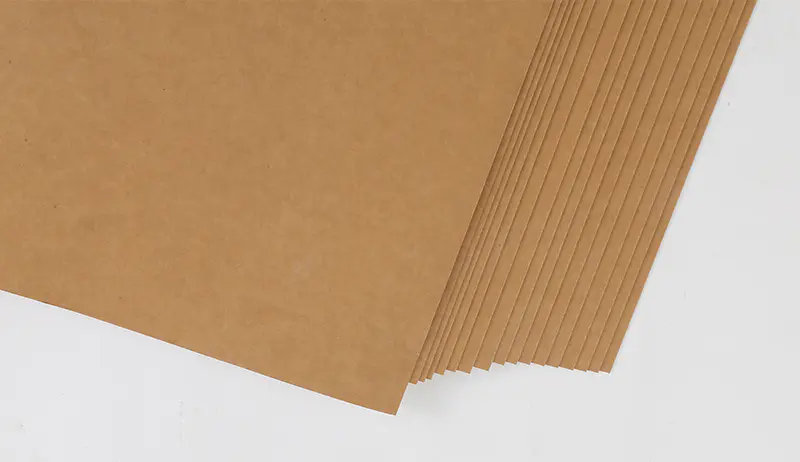
The fundamental architecture of poly coated paper sheets consists of a cellulose-based substrate (typically kraft paper) laminated with a thin polymer layer, most commonly low-density polyethylene (LDPE) or linear low-density polyethylene (LLDPE). This polymer layer is not merely a coating; it is a functional barrier engineered to prevent the migration of paper fibers, oils, and other constituents into the food product. For a product to be deemed safe for direct contact, it must strictly adhere to regulatory frameworks such as Title 21 of the Code of Federal Regulations (CFR) in the United States or EU Regulation 10/2011 in Europe.
Central to this safety verification is the distinction between standard industrial paper and food grade poly coated paper sheets. The "food grade" designation certifies that the raw materials and the adhesives used in the lamination process are non-toxic and chemically inert under intended usage conditions. Rigorous testing protocols, including overall migration limits (OML) and specific migration limits (SML), ensure that harmful substances do not leach into food, even when subjected to high temperatures or acidic environments.
According to the 2024 Food Packaging Safety Assessment by the Food and Agriculture Organization (FAO), advancements in polymer recycling technologies and stricter controls on non-intentionally added substances (NIAS) have significantly improved the safety profile of paper-based packaging materials intended for direct contact.
Source: Food and Agriculture Organization (FAO) - Food Safety Standards
Compliance Comparison: General vs. Food Grade
When selecting materials for food service operations, understanding the divergence between standard packaging materials and certified food-safe variants is critical. Below is a comparison of the attributes of non-food grade and food grade specifications.
| Attribute | Standard Coated Paper | Food Grade Poly Coated Paper |
| Regulatory Status | Not certified for food contact; may contain industrial additives. | Meets FDA/EFSA standards; safe for direct food contact. |
| Material Purity | May utilize recycled content without decontamination. | Virgin or high-quality purified resins; strict traceability. |
| Migration Safety | Potential for chemical transfer into food (unsafe). | Tested for low migration; prevents contamination. |
| Intended Use | Industrial wrapping, interleaving, dust covers. | Direct food wrapping, basket liners, serving trays. |
Functional Advantages for Food Safety
The technical rationale for using poly coated paper sheets extends beyond regulatory compliance; it is rooted in the physics of fluid dynamics and preservation. The primary function of the poly coating is to act as a hydrophobic barrier. In the context of food safety, uncoated paper is highly susceptible to absorption, which leads to structural failure and potential cross-contamination. When paper becomes saturated with grease or liquids, it loses its tensile strength and can tear, exposing the food to external contaminants or, conversely, allowing the food to leak onto surfaces.
The utilization of greaseproof poly coated paper sheets specifically addresses this failure mode. By creating an impermeable layer against lipids and aqueous solutions, these sheets maintain their mechanical integrity throughout the supply chain and service life. This is particularly vital for packaging high-fat foods such as fried items, pastries, or meat products. The "greaseproof" capability ensures that the barrier remains intact, preventing "soggy bottom" syndrome and preserving the sensory qualities of the food while ensuring hygienic handling.
Sustainability and Environmental Considerations
As the packaging industry pivots toward circular economy models, the environmental footprint of poly coated paper sheets is under intense scrutiny. Traditionally, the polyethylene coating made recycling difficult, as separating the plastic from the paper fiber in a standard pulping process was technically unfeasible. However, the market is currently undergoing a significant technological shift.
Innovations in polymer chemistry have led to the development of biodegradable poly coated paper sheets. These new formulations utilize bio-based polymers, such as Polylactic Acid (PLA) or other compostable resins, which provide the necessary barrier properties against moisture and grease without the persistence of fossil-fuel-derived plastics. According to the latest industry data from the European Paper Packaging Alliance (EPPA) in 2024, the adoption of water-based dispersion barriers and bio-based coatings is accelerating, offering viable alternatives that maintain food safety while enhancing end-of-life compostability.
Source: European Paper Packaging Alliance (EPPA) - Innovation & Sustainability Reports
Customization and B2B Procurement Standards
For restaurants, quick-service chains, and food manufacturers, packaging serves a dual purpose: protection and brand communication. Custom printed poly coated paper sheets allow businesses to leverage every square inch of packaging real estate for marketing. However, B2B buyers must exercise caution during the procurement process. The inks and dyes used in custom printing must also be food-safe and resistant to migration (set-off), especially when the printed side contacts the food or is stacked tightly.
When procuring inventory, businesses often opt for wholesale poly coated paper sheets to optimize unit economics. However, purchasing at scale requires a rigorous vetting process of the supplier’s quality control systems. Buyers must verify that the supplier consistently produces material that meets the specific caliper (thickness), basis weight, and coating weight specifications required for the intended application. Inconsistencies in the coating process can lead to "pinholes"—microscopic voids in the polymer layer that compromise grease resistance and, consequently, food safety.
Conclusion
In conclusion, poly coated paper sheets are a safe and essential component of modern food packaging when manufactured and specified correctly. Their safety is ensured through rigorous adherence to food-grade regulations, which govern the purity of the poly coating and the substrate. Whether utilizing greaseproof variants for fried foods or biodegradable options for eco-conscious branding, these materials provide the necessary barrier protection to preserve food quality and hygiene. For B2B buyers, the priority lies in partnering with manufacturers who can certify compliance and deliver consistent quality, ensuring that the packaging acts as a reliable guardian of public health.
Frequently Asked Questions (FAQ)
- Q1: What temperature limits apply to poly coated paper sheets?
A: Generally, poly coated paper sheets can safely withstand temperatures up to approximately 200°F (93°C) for short periods, making them suitable for hot foods but not for oven baking or microwave use unless specifically designated as microwave-safe. - Q2: Are all poly coated paper sheets recyclable?
A: No, traditional polyethylene-coated paper is often not recyclable in standard waste streams. However, new biodegradable poly coated paper sheets are designed to be compostable in industrial facilities, mitigating environmental impact. - Q3: Can these sheets be used in a microwave?
A: Unless explicitly labeled as microwave-safe, standard food grade poly coated paper sheets should not be used in a microwave, as the heat can melt the polyethylene coating, causing food contamination and potential fire hazards. - Q4: How do I verify if a sheet is "food grade"?
A: Look for regulatory compliance symbols such as FDA approval (in the US) or request a Declaration of Compliance (DoC) from the supplier which certifies the material as food grade poly coated paper sheets. - Q5: What is the difference between waxed paper and poly coated paper?
A: Waxed paper has a lower melt point and less structural strength, while greaseproof poly coated paper sheets offer superior durability, better moisture barrier properties, and are generally more resistant to tearing under heavy loads.

Leave A Comment
Recommend Products
-
Give Us A Call
+86-17681768990
- Send Us A Message
-
Factory Address
#99, Rd. Keji, Longgang City, Zhejiang Province, China

