

 English
 Español
What Is White Paperboard and Why Use It?
Introduction: The Unsung Hero of Modern Packaging
In a world where first impressions are often visual and tactile, the choice of packaging material speaks volumes about a product's quality and brand identity. At the forefront of premium packaging solutions is white paperboard, a versatile and high-performing material prized for its brilliant whiteness, superior smoothness, and exceptional printability. More than just a container, white paperboard serves as a blank canvas for brand storytelling, transforming ordinary boxes into luxurious experiences that engage customers on the shelf and at unboxing. Its inherent stiffness provides robust protection, while its pristine surface ensures that colors pop and fine print details remain crisp. As industries from cosmetics and pharmaceuticals to electronics and gourmet foods seek to elevate their market presence, understanding the properties and applications of this material becomes crucial. Furthermore, in an era increasingly focused on sustainability, the role of recyclable white paperboard within the circular economy is a significant point of consideration for environmentally conscious brands. This article delves into the technical specifications, practical applications, and sustainable advantages of white paperboard, providing a comprehensive guide for businesses and designers making critical material decisions for their packaging and printing projects.
- Premium Aesthetic: Offers a bright, clean, and high-quality surface that enhances perceived product value.
- Functional Versatility: Balances protective rigidity with excellent formability for diverse packaging structures.
- Brand Communication: Acts as a primary medium for high-fidelity printing, enabling vibrant graphics and precise branding.
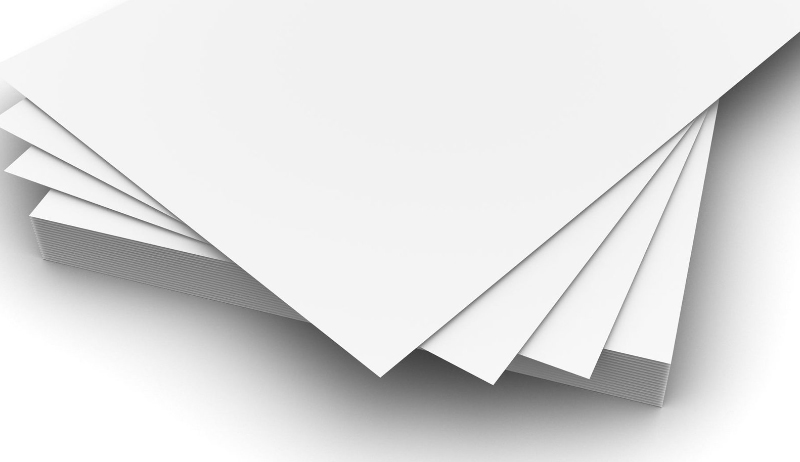
Understanding White Paperboard: Composition and Key Characteristics
White paperboard is a multi-ply, wood pulp-based material characterized by its white color on both the top and bottom surfaces. Its superior quality stems from a refined manufacturing process that includes bleaching the pulp and applying multiple layers of coating, typically china clay or calcium carbonate, to achieve its signature smoothness and whiteness. This coating process, known as "clay coating," fills the microscopic pores in the paper fibers, creating a uniform surface that is ideal for accepting ink. The result is a material with high brightness and excellent opacity, preventing show-through from the reverse side. Beyond aesthetics, white paperboard possesses key physical properties such as high stiffness-to-weight ratio, good folding endurance, and reliable puncture resistance. These characteristics make it not only beautiful but also structurally sound for creating durable boxes, cartons, and displays that maintain their shape throughout the supply chain and consumer use.
- Multi-Ply Construction: Built from several layers of pulp, providing internal strength and stability.
- Clay Coating: A critical finishing step that ensures a supremely smooth, printable surface and consistent whiteness.
- Key Metrics: Quality is measured by brightness (CIE whiteness), smoothness (Bendtsen or Parker Print-Surf), stiffness, and grammage (gsm).
White Paperboard Applications: Where It Shines
The unique combination of aesthetics, printability, and structural integrity makes white paperboard the material of choice for numerous high-end applications. Its ability to convey quality and sophistication is unmatched in many sectors, serving both functional and marketing roles effectively.
The Premium Choice for Packaging
When the goal is to impress and protect, white paperboard for packaging is often the preferred solution. Its rigid yet precise foldability allows for the creation of complex carton structures with crisp edges and secure closures. In the cosmetics industry, it is the standard for luxury perfume boxes, makeup compacts, and skincare sets. Pharmaceutical companies use it for medicine cartons that require a clean, clinical appearance and clear, legible printing for vital information. Consumer electronics brands utilize it for smartphone sleeves and accessory boxes, where the unboxing experience is part of the product allure. For gift items, confectionery, and premium beverages, a white paperboard box instantly elevates the contents, making it feel special and thoughtfully presented.
- Cosmetics & Fragrance: Provides a flawless base for metallic foiling, embossing, and high-gloss finishes.
- Pharmaceuticals: Meets strict regulatory requirements for hygiene and print clarity for dosage information.
- Electronics & Luxury Goods: Creates a protective and premium "first touchpoint" for high-value items.
The Perfect Substrate for High-Quality Printing
The quest for the ideal white paperboard for printing ends with its exceptional surface characteristics. The smooth, coated surface allows ink to sit on top of the sheet rather than being absorbed into the fibers. This results in sharper dots, more vibrant colors, and superior reproduction of fine details and gradients. It is compatible with all major printing techniques, including offset lithography (for large, high-quality runs), digital printing (for short-run customization), flexography, and luxurious specialty finishes like UV spot coating and soft-touch lamination. Whether the project is a sleek product catalog, a sturdy business card, a point-of-sale display, or a intricate package design, white paperboard ensures that the visual design is executed with precision and impact.
- Color Fidelity: Bright white background provides maximum contrast, making colors appear truer and more saturated.
- Detail Reproduction: Smooth surface holds fine screens and small typefaces without feathering or dot gain issues.
- Finish Versatility: Excellent base for applying post-print varnishes, laminates, and decorative effects.
Choosing the Right White Paperboard: A Technical Guide
Selecting the appropriate white paperboard requires careful consideration of several technical factors to ensure performance aligns with the application's demands. From thickness and weight to material composition and environmental profile, each variable plays a role in the final product's functionality, cost, and sustainability.
Decoding Thickness and Weight
A common point of confusion is understanding the relationship between thickness (caliper) and basis weight. A comprehensive white paperboard thickness guide is essential for designers and buyers. Thickness, measured in microns (µm) or points (pt), directly influences the perceived sturdiness and "premium feel" of the final carton. Basis weight, measured in grams per square meter (gsm), indicates the density of the material. For most packaging applications, a balance between the two is sought. A thicker board provides more protection and rigidity but may be harder to fold and more expensive. Lighter weights are suitable for smaller items or internal structures.
| Common Caliper (Thickness) | Typical Grammage (Weight) | Suggested Applications |
| 12-16 pt (300-400 µm) | 250-300 gsm | Greeting cards, postcards, business cards, paperback book covers. |
| 18-24 pt (450-600 µm) | 300-400 gsm | Cosmetic boxes, software boxes, premium folders, game boards. |
| 24-32 pt (600-800 µm) | 400-500 gsm | Small luxury gift boxes, electronics packaging, rigid set-up boxes. |
White Paperboard vs. Other Materials: Making an Informed Choice
It's crucial to distinguish white paperboard from other common packaging substrates. A frequent comparison is white paperboard vs cardboard. Colloquially, "cardboard" often refers to corrugated fiberboard (with a fluted middle layer) or grey chipboard. White paperboard is typically solid bleached sulfate (SBS) or folding boxboard (FBB), offering a premium print surface and clean edges, whereas corrugated cardboard is primarily for shipping and heavy-duty protection with a brown, textured appearance. Grey chipboard is an economical option often used for shoeboxes or as a backing board, but it lacks the bright white printable surface.
| Material | Structure & Appearance | Primary Strengths | Common Uses |
| White Paperboard (SBS/FBB) | Solid, multi-ply, bright white smooth surfaces. | Superior printability, high stiffness, clean aesthetics. | Retail packaging, cosmetics, pharmaceuticals, food cartons. |
| Corrugated Cardboard | Layered with fluted medium; brown, textured. | Exceptional cushioning, stacking strength, low cost. | Shipping boxes, bulk运输, protective secondary packaging. |
| Grey Chipboard | Solid, made from recycled fibers; grey color. | Rigidity, cost-effectiveness, eco-friendly (recycled content). | Backing boards, shoeboxes, inexpensive cartons. |
The Sustainability Angle: Recyclability and Environmental Impact
The environmental profile of recyclable white paperboard is a major advantage. Being fiber-based, it is widely accepted in municipal recycling streams. Its high-quality fibers can be repulped and reused in the production of new paper products multiple times. For brands, specifying paperboard with high post-consumer recycled (PCR) content or sourcing from responsibly managed forests (certified by FSC® or PEFC) significantly reduces environmental footprint. Innovations in coatings and barriers are also making it more compatible with composting systems under specific conditions. Choosing white paperboard is often a step toward meeting corporate sustainability goals and responding to consumer demand for eco-friendly packaging.
- Recycling Streams: Easily processed in standard paper recycling facilities, supporting a circular economy.
- Certifications: Look for FSC® certification to ensure responsible forestry and high recycled content labels.
- End-of-Life Options: Offers clearer and often more favorable disposal pathways compared to multi-material laminates.
FAQ
Is white paperboard food-safe for direct contact?
Yes, specific grades of white paperboard are manufactured to be food-safe. These grades are produced under strict hygiene controls, using approved pulps and coatings that comply with international regulations such as FDA in the USA and EC 1935/2004 in the EU. They are commonly used for dry food packaging like cereal boxes, cake boards, frozen food cartons, and disposable paper plates or cups. For direct contact with greasy or moist foods, the paperboard is often treated with a food-grade barrier coating, such as PLA (a biopolymer) or polyethylene, to prevent oil and moisture migration.
Can white paperboard be used for eco-friendly or biodegradable packaging?
Absolutely. The core material—wood fiber—is inherently biodegradable under the right conditions. The key to maximizing eco-friendliness lies in the specifics. Uncoated or minimally coated recyclable white paperboard is an excellent eco-choice. For certified compostability, the entire product (including any inks, adhesives, and coatings) must meet standards like ASTM D6400 or EN 13432. Many manufacturers now offer paperboard paired with compostable biopolymer coatings (e.g., PLA), creating packaging suitable for industrial composting facilities. Always verify the certifications provided by the supplier for compostability claims.
What’s the difference between SBS and FBB in white paperboard?
SBS (Solid Bleached Sulfate) and FBB (Folding Boxboard) are the two primary types of high-quality white paperboard. SBS is made from 100% virgin bleached chemical pulp, resulting in a brilliant white color throughout its entire thickness. It has exceptional purity, stiffness, and superior folding performance, making it the top tier for luxury packaging. FBB, also known as GC1 or GC2, has a middle layer of mechanical pulp (often recycled content) sandwiched between top and bottom layers of bleached chemical pulp. This gives it a slightly grey core but a bright white printable surface. FBB offers excellent value and good performance for many applications but is generally not as bright, stiff, or pure as SBS.
How do I choose the right thickness of white paperboard for my product box?
Follow this practical white paperboard thickness guide principle: match the thickness to your product's weight, size, and desired perception. For small, lightweight items (e.g., jewelry, cosmetics), 18-24 pt provides ample structure and a premium feel. For heavier items (e.g., a bottle of spirits, tech accessories), 24-32 pt or thicker is necessary for protective rigidity. Also consider the box size; a large-format box made from too-thin board will feel flimsy and may collapse. Always request physical samples from your supplier to assess the hand-feel, folding quality, and structural integrity for your specific design before committing to a production run.
Is white paperboard more expensive than regular cardboard?
Typically, yes. White paperboard is generally more expensive than materials like corrugated cardboard or grey chipboard (often called "regular cardboard"). This cost difference reflects the higher-quality virgin or refined pulps, the bleaching process, the multi-ply construction, and the clay coating required to achieve its premium properties. However, it's an investment in brand value. The exceptional print quality and luxurious appearance can significantly enhance product presentation, justify a higher price point, and improve customer perception, often delivering a strong return on investment through increased sales and brand equity.

Leave A Comment
Recommend Products
-
Give Us A Call
+86-17681768990
- Send Us A Message
-
Factory Address
#99, Rd. Keji, Longgang City, Zhejiang Province, China

