

 English
 Español
What Is White Paper Board Used For?
white paper board is a high-performance paper-based material widely used in folding cartons, food packaging, and premium printing applications. For B2B buyers, understanding fiber structure, coating technology, stiffness performance, and compliance standards is essential when selecting the right grade for industrial production.
White Paper Board for Packaging Boxes
Why white paper board for packaging boxes Is Preferred in Folding Cartons
Compared with brown kraft board, white board offers superior surface smoothness and printability while maintaining structural rigidity. Its multi-layer fiber structure enhances compression strength, making it ideal for automated die-cutting and high-speed filling lines.
- High stiffness-to-weight ratio
- Excellent folding endurance
- Superior surface brightness for branding
- Cost efficiency in mass production
| Property | White Paper Board | Kraft Board |
| Surface Smoothness | High | Moderate |
| Print Quality | Excellent | Limited |
| Structural Rigidity | High | High |
Key Technical Specifications for Packaging Applications
Engineers evaluate GSM, caliper, ring crush strength (RCT), and bending resistance when specifying board grades.
- 200–250 GSM: Light retail cartons
- 250–350 GSM: Standard folding cartons
- 350–450 GSM: Heavy-duty packaging
- Moisture resistance via coating or lamination
Industry Applications
- Food cartons
- Cosmetic packaging
- Pharmaceutical boxes
- Electronics retail packaging
Coated white paper board for printing
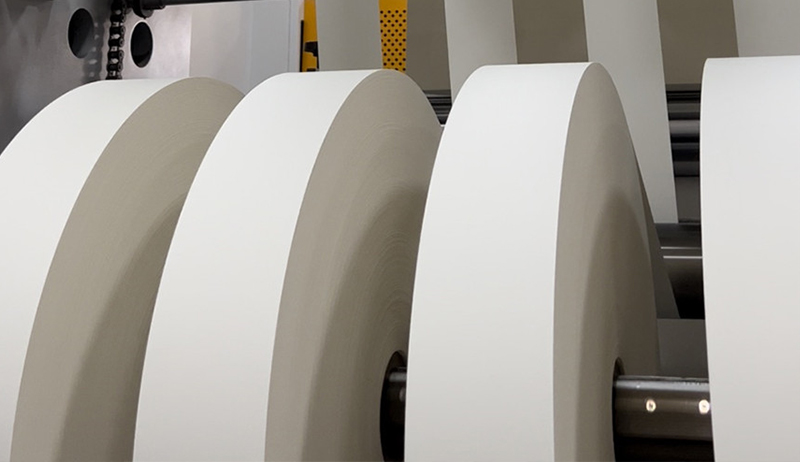
Types of Coatings Used in White Paper Board
Coatings improve ink adhesion and barrier performance. Clay-coated surfaces enhance print resolution, while PE or water-based coatings improve moisture resistance.
- C1S (Coated One Side)
- C2S (Coated Two Sides)
- PE extrusion coating
- Water-based dispersion coatings
| Coating Type | Primary Function | Typical Application |
| Clay Coating | Print Enhancement | Retail Packaging |
| PE Coating | Moisture Barrier | Food Packaging |
| Water-Based Coating | Eco Barrier | Sustainable Packaging |
Printing Performance and Ink Compatibility
coated white paper board for printing supports offset, flexographic, and digital printing technologies. Surface porosity controls ink absorption rate, affecting color density and drying time.
- High brightness improves CMYK contrast
- Controlled absorbency prevents ink bleeding
- Low surface roughness ensures fine detail reproduction
Food grade white paper board material
Food Safety Standards and Compliance
For direct food contact, board must comply with FDA and EU food regulations. Migration testing evaluates potential transfer of substances into food under specific temperature and time conditions.
- FDA 21 CFR compliance
- EU Framework Regulation (EC) No 1935/2004
- LFGB testing requirements
- Grease and oil resistance standards
| Requirement | Food Grade Board | Standard Board |
| Migration Testing | Required | Not Mandatory |
| Oil Resistance | High | Moderate |
| Certification | Mandatory | Optional |
Barrier Performance for Food Applications
Barrier properties depend on coating technology and fiber density. Oil resistance is essential for takeaway containers and trays.
- Moisture vapor transmission control
- Grease resistance (Kit test rating)
- Heat sealing compatibility
High stiffness white paper board sheets
What Determines Stiffness in Paperboard?
Stiffness is influenced by fiber length, layer composition, and caliper. Multi-ply construction improves bending resistance without excessive weight increase.
- Long-fiber pulp increases rigidity
- Higher caliper improves bending stiffness
- Optimized ply bonding enhances strength
| Factor | Effect on Stiffness |
| Fiber Length | Longer fibers increase strength |
| Caliper | Thicker board increases rigidity |
| Ply Structure | Multi-layer improves performance |
Performance Comparison: Standard vs High Stiffness Board
While standard grades are cost-effective, high stiffness variants offer better stackability and compression strength for logistics.
| Criteria | Standard Board | High Stiffness Board |
| Bending Resistance | Moderate | High |
| Compression Strength | Standard | Enhanced |
| Logistics Stability | Medium | Excellent |
White paper board gsm thickness guide
Understanding GSM and Caliper
The white paper board gsm thickness guide helps procurement managers align weight with structural requirements. GSM (grams per square meter) measures surface density, while caliper measures thickness in microns.
- Higher GSM generally increases durability
- Caliper influences folding performance
- Optimized weight reduces shipping cost
| GSM Range | Typical Thickness | Application |
| 200–250 | Approx. 250–320 μm | Light Cartons |
| 250–350 | 320–450 μm | Retail Packaging |
| 350–450 | 450–600 μm | Rigid Applications |
About Zhejiang Justeco Technology Co., Ltd.
Zhejiang Justeco Technology Co., Ltd. specializes in sustainable packaging solutions. The company operates a 70,000+ square meter production base equipped with 100,000 and 300,000 level cleanrooms and over 200 production systems.
- Annual capacity: 60,000 tons of degradable materials
- Nearly 1 billion finished products per year
- Full-process capabilities: food-grade paper, coating, flexographic printing, die-cutting, molding
- Certifications: ISO9001, ISO14001, ISO22000, ISO45001, FSC, BRC, BPI, DIN, LFGB, FDA, EU food compliance
FAQ
1. What is the difference between white paper board and ivory board?
Ivory board typically refers to higher-grade multi-ply board with superior brightness and stiffness, often used for premium packaging.
2. How do I choose the right GSM?
Select GSM based on load-bearing needs, product weight, and stacking requirements. Heavy products require 350 GSM or above.
3. Is coated white board recyclable?
Clay-coated board is recyclable, while PE-coated board requires specialized recycling streams.
4. What certifications are required for food packaging?
FDA, EU food contact regulations, and migration testing are typically required.
5. Does higher stiffness mean higher cost?
Generally yes, due to fiber quality and structural optimization, but it reduces damage-related losses in logistics.
References
- ISO 536: Paper and board — Determination of grammage
- ISO 534: Paper and board — Determination of thickness
- FDA 21 CFR – Food Contact Substances Regulations
- European Commission Regulation (EC) No 1935/2004
- TAPPI T489 – Bending resistance of paper and paperboard

Leave A Comment
Recommend Products



-
Give Us A Call
+86-17681768990
- Send Us A Message
-
Factory Address
#99, Rd. Keji, Longgang City, Zhejiang Province, China

